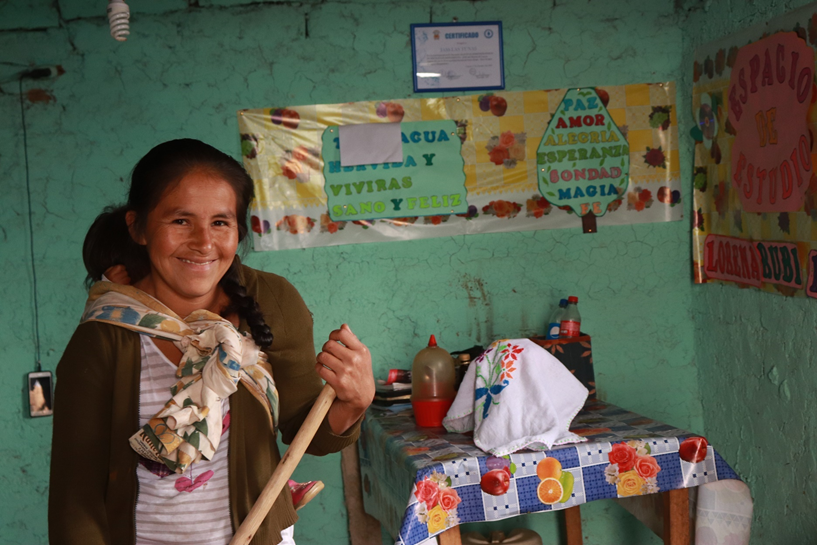
Doña Noa, mother of six children, tells us her story of progress and family value thanks to drinking water.
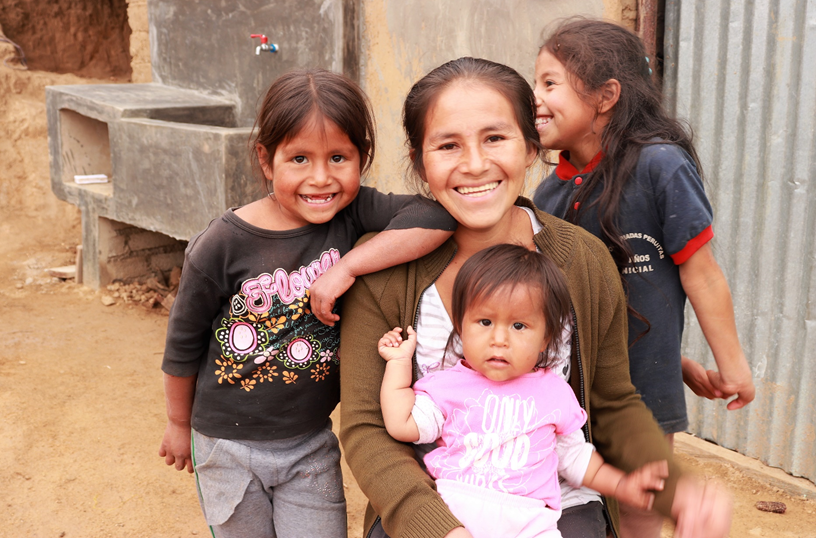
«Before, we lived in my mother’s house. We had a small plot of land that we had started to build on, but we left it half-finished. When the drinking water project began, Mrs. Rosa (a health educator) came and gave us encouragement, strength, and courage to finish our little house. Through several training sessions, the families learned that each family should live in their own house and there, on that small plot of land, build or improve our bathrooms, our garbage pits, and drainage wells.».
Noa's life was hard before drinking water. Women had to collect water from the irrigation canal to carry out household chores. The worst season was winter, when the rains destroyed the canal, leaving the community without water.
Noa's life was hard before drinking water. Women had to collect water from the irrigation canal to carry out household chores. The worst season was winter, when the rains destroyed the canal, leaving the community without water.
The distance between Pampas de Chepate and Las Tunas is 3 hours, walking.
«We lived like this for about 15 years, without running water at home, and it was a very hard life. Going to the streams and fetching water isn't easy; the path is steep, and carrying the heavy buckets is arduous. Besides, the area around the streams is windy, and the wind made us sick. The water from the streams isn't clean; it runs through the pastures, and up there the animals are grazing. But what could we do? It was the only option we had. Once back at home, we had to be careful to use as little as possible and prioritize cooking.».
Noa tells us, before building the garbage pits, it was customary to throw everything into the river and that practice also contaminated the water, without taking into account that this water also supplied many families in the Las Tunas hamlet.
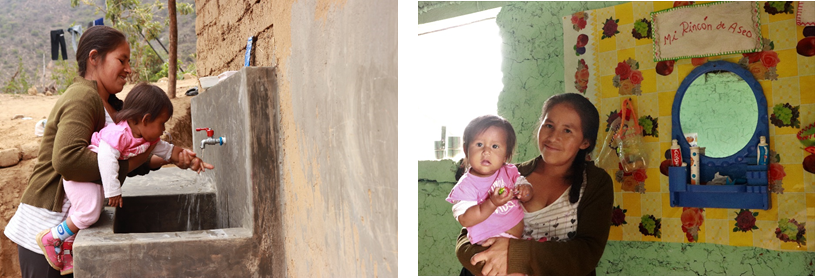
«"The best thing about all this work is that our families can now drink clean water, and it's readily available in our homes. Now we won't have to suffer anymore, especially the children and us women who had to get water from wherever we could... I personally thank the people who made our water possible, because after 15 years of suffering, we can live a better life. Now it's a blessing to turn on the tap and have water.".
For now, Noa has her own little house with a latrine, but that won't stay there. The next step is to build a bathroom with a shower for more comfort. «"Doña Rosita (health educator) also taught us to live better, to keep our little house in order and to take care of what we have; among these, water.".